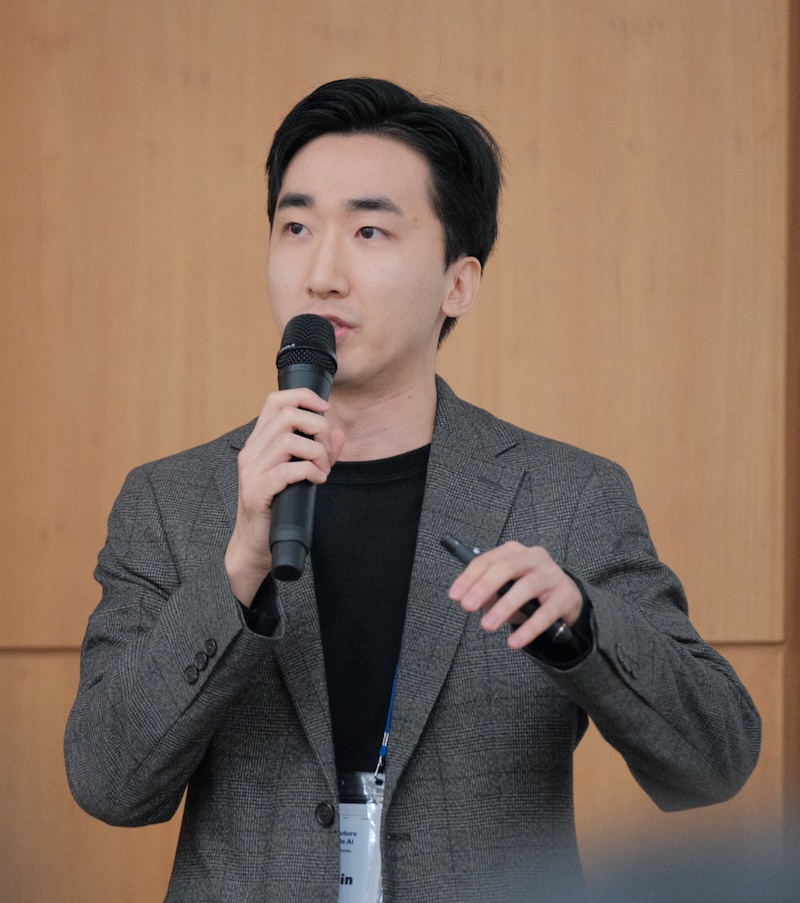
Hi, I am Hojun.
I study how advanced software and AI systems are built, deployed, and governed in the real world.
I am a Master of Information Systems Management student at Carnegie Mellon University, focusing on the intersection of AI, systems design, and institutional decision-making.
About
I am a Master of Information Systems Management student at Carnegie Mellon University. I care deeply about how AI systems are deployed in practice, how organizations make decisions around technology, and what responsible governance looks like.
I chose CMU MISM because it sits at the intersection of engineering, analytics, and public-minded design. I want to work on problems where technical details, human behavior, and institutional choices all matter.
Experience
-
CMU AIMSEC · Assistant Project Coordinator, Part-time (Jan. 2026 – Present)
Support the CMU and NIST AI Measurement Science & Engineering Cooperative Research Center, which develops methods to evaluate and measure AI systems in line with the NIST AI Risk Management Framework.
In October 2026, I served on the organizing committee for Advancing the Science of AI Agent Evaluation and Governance, a two-day workshop co-hosted by Microsoft Research and AIMSEC at the Microsoft Research New York City Lab. The event brought together more than 180 leaders from academia, industry, government, and civil society to define shared standards for evaluating and governing AI agents. I coordinated invitations and introductions for over 25 speakers, including leaders from Microsoft Responsible AI, Anthropic, and Hugging Face, and helped run a program of keynotes, panels, lightning talks, and working groups whose findings will be published as open synthesis reports for the field.
Day to day, I coordinate research programs, events, and communications across the center, and run hands-on evaluation exercises in MARS, the center's new AI evaluation sandbox. -
Deloitte · Technology Consultant (2023–2025)
Worked on enterprise systems (SAP, Oracle, SQL, Linux) supporting business operations and large-scale clients. -
Taycor Financial · Software Engineer Intern (2022)
Built internal automation tools and backend services using Python and Azure.
Projects
-
District-Level Flood Risk Forecasting · UNOPS (United Nations Office for Project Services)
A machine learning capstone with UNOPS that helps humanitarian teams move from reacting to disasters toward anticipating them. I lead a team building a proof of concept that estimates the monthly flood risk of each district, so that UNOPS can decide where to prepare before a flood happens rather than after. The model combines ten years of satellite and climate data: CHIRPS rainfall, ERA5-Land soil moisture, SRTM elevation and slope, El Niño (Niño 3.4) signals, cropland share, and population. It is trained on flood labels derived from Sentinel-1 satellite imagery, using gradient boosting alongside a linear baseline. The output turns each district's flood probability into a likelihood level from 0 to 3, then into a risk ranking that weighs likelihood against impact, giving decision makers a clear list of where to act first. The pipeline runs on GCP with BigQuery and Cloud Run. -
Comment Sense · U.S. Department of State
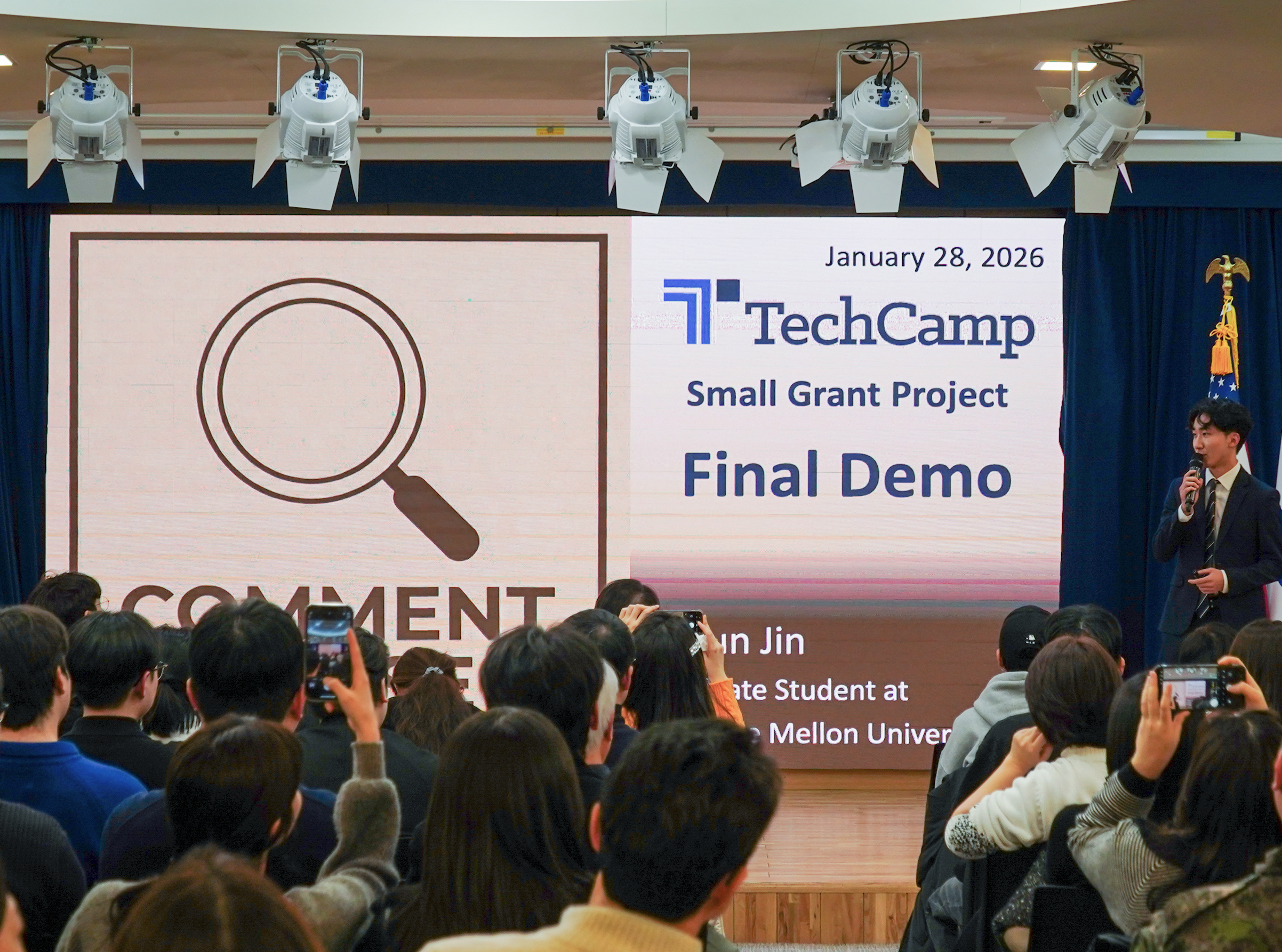
Comment Sense is a GenAI-powered Chrome extension designed to support healthier online discussions by helping users better understand and evaluate comments they encounter online. The project focuses on analyzing claims within comments and surfacing relevant references and contextual information, enabling users to engage more critically rather than reactively. Originally supported by the U.S. State Department's TechCamp program, Comment Sense is currently being refined as a responsible AI tool for improving digital discourse and media literacy.
-
AI Route Planning · U.S. Army
AI Route Planning was a GenAI-powered ATAK-CIV plugin concept built to help Platoon Leaders plan routes through hostile terrain faster and more safely. Developed through Carnegie Mellon's Hacking for Defense (H4D) program in partnership with the U.S. Army, the project replaced a slow, manual planning process with a tool that generated and compared candidate routes based on tactical variables such as speed priority, enemy detection risk, and terrain conditions. Working directly with Army stakeholders, our team took the idea from problem discovery to a proof-of-concept prototype aimed at improving operational efficiency and soldier safety in the field.
Contact
The best way to reach me is by email: hojunjin122@gmail.com
I am always happy to connect about AI evaluation, responsible AI, applied AI systems, research collaborations, and opportunities to build technology for high-impact domains.